In this article
A good small business website does three jobs. It tells people quickly what you do and where, it proves you're good at it, and it makes getting in touch easy. Everything in this guide supports one of those jobs. If something on your current site doesn't, it can probably go.
We design and build websites for small businesses across Leicester and the East Midlands, from plumbers and nurseries to clinics and food brands. This is the checklist we work from on every project, with examples from real CL42ITY work.
A clear first screen
Within a few seconds a visitor should know what you do, where you work and how to contact you. A headline like 'Kitchen fitting in Leicester and Leicestershire' beats a slogan every time, for people and for Google. Put one clear button underneath it: call, WhatsApp or request a quote.
Test it on a phone. Hold it at arm's length, open your homepage and count to three. If you can't say what the business does, where it works and how to get in touch, the first screen needs work.
A page for every service
If you offer boiler repairs, bathroom fitting and power flushing, each one deserves its own page. It's the single most useful thing you can do for local SEO, because each page can answer the exact questions people search for that service: what it involves, how long it takes, roughly what it costs and which areas you cover.
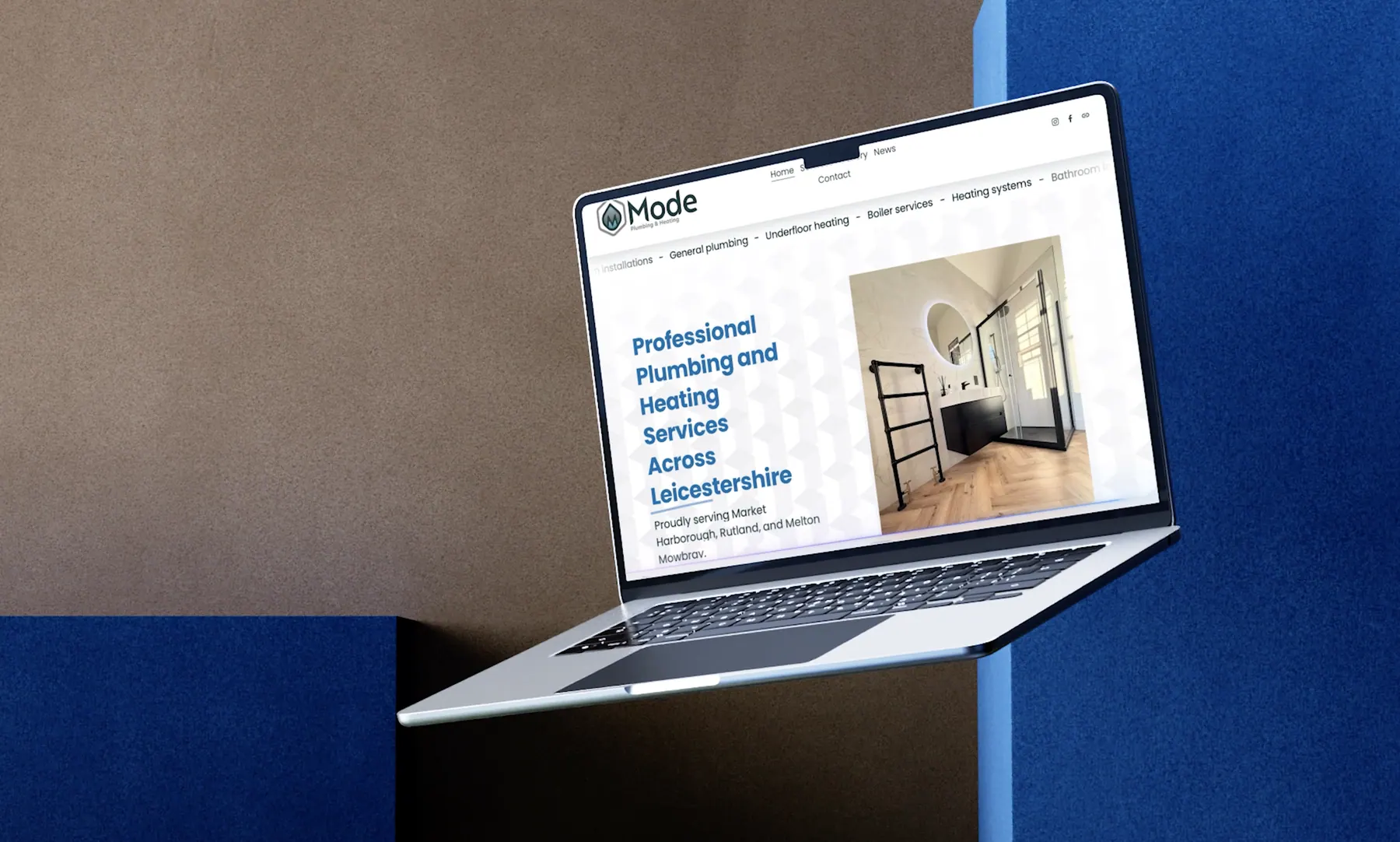
When we rebuilt the website for Mode Plumbing & Heating, local SEO was part of the brief from day one, so the structure and wording were planned around how customers actually search rather than added afterwards.
Proof that you're good at it
- Real photos of your work, team and premises.
- Reviews, ideally pulled from Google so they're verifiable.
- Short case studies: the job, what you did, the result.
- Accreditations and memberships, linked to the body that awarded them.
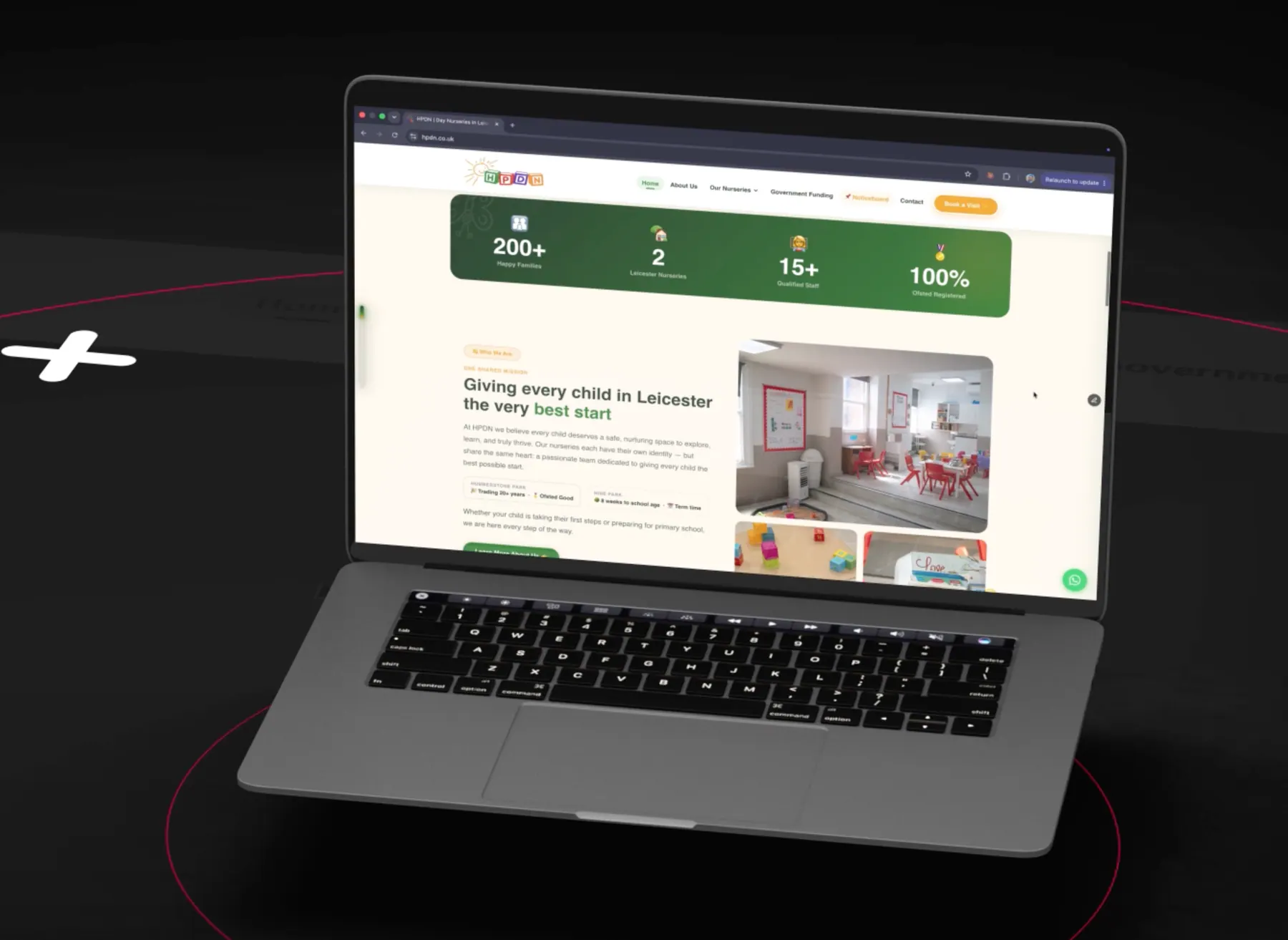
Real photography does more for trust than any amount of copy. For Humberstone Park Day Nursery we handled the photography and drone filming ourselves, so parents see the real setting before they visit. Stock photos of smiling children would have said nothing about the nursery itself.
Your details, the same everywhere
Your business name, phone number, email and the areas you cover should match exactly what's on your Google Business Profile and directories. Put them in the footer of every page. Google and AI tools such as ChatGPT cross-check these details, and small differences make them less sure who you are.
The same goes for your look. A website that matches your vans, signs and social media makes you look established. We designed Mode's van wrap alongside the website so the two read as one brand.
Easy contact and booking
Offer more than one route. Some people want to call, some want to message on WhatsApp and some prefer a short form. Keep forms short: name, contact details, what they need. You can ask the rest when you reply.
If customers book appointments, let them book online. For Adept Sports Therapy we built a booking-ready website, so people can book an appointment the moment they decide, even outside clinic hours.
Speed and mobile
Most local searches happen on a phone. Your site should load in a couple of seconds on mobile data, with text you can read without zooming and buttons big enough to tap. You can test any page for free with Google's PageSpeed Insights.
We hold our own site to the same standard: it scores in the high 90s for mobile speed on PageSpeed Insights. We wrote up how we took our website from 61 to 98, and the same approach goes into every site we build.
The behind-the-scenes basics
- A unique title and description for every page.
- Structured data that tells Google your business type, address and opening hours.
- Google Search Console and analytics set up from day one.
- A privacy page that explains what you collect.
- Secure hosting with HTTPS and regular backups.
None of this shows on the page, but it decides how well Google and AI search understand your business. It's included in every website we build, not sold as an extra.
Answers to the questions people ask before they buy
Think about the questions you answer on the phone every week: how much, how long, do you cover my area, what happens next. Answer them plainly on the relevant pages. It saves you time, it helps people decide, and it gives Google's AI Overviews and ChatGPT clear sentences to quote when someone asks about your kind of business.
What you can skip
Auto-playing sliders, pop-ups that cover the page, a news section you'll never update and stock photos of people shaking hands. They slow the site down and don't win work. A big animated intro is the same: if it delays the moment someone sees what you do, it costs you enquiries.
What a website like this costs
Our websites start at £500 for one page and £1,200 for up to five pages. A Business website of up to ten pages, with a blog included, starts at £2,000, and copywriting is included on every site. Every site is hosted and looked after by us, from £50 a month. You can get an exact price for your project in about two minutes with our website cost calculator, or see every price.
Questions we're often asked
How many pages does a small business website need?
Most need between five and ten: home, about, contact, reviews or work, and a page for each main service. Add town pages only where you genuinely work and have something specific to say about each place.
Can I update it myself?
Yes, if you want to. Many clients prefer to send us changes instead, which is why our hosting and care plans include time for small updates each month.
How long does it take?
A Starter website usually launches in two to three weeks and a Business website in three to five, depending on how quickly we get content and feedback.
Need a hand?
This checklist is how we approach every project. If you'd like a website that ticks every box, see our web design service in Leicester, browse recent work or book a free call.